
Essential Fall Roof Maintenance Checklist
A few hours of prevention in autumn can help spare you from leaks, damaged insulation, and emergency repairs once winter arrives. That matters in Rochester, where wind, freeze-thaw cycles, and heavy lake-effect snow can turn a small roofing weakness into a costly interior problem.
This fall roof maintenance checklist explains what homeowners can safely inspect, which warning signs deserve attention, and when to call Home Solution Experts. Start early enough to leave time for repairs before cold temperatures and unpredictable weather narrow the roofing season.
For safety, complete visual checks from the ground or through an accessible window whenever possible. Do not walk on a steep, wet, frosty, or visibly damaged roof. A professional inspection is safer and more reliable when the roof is difficult to access.
1. Inspect the Roof and Exterior from the Ground
Choose a dry, bright day and walk around your property with binoculars or your phone’s camera zoom. Look at every visible roof slope rather than checking only the side facing the street.
Check the shingles
Watch for:
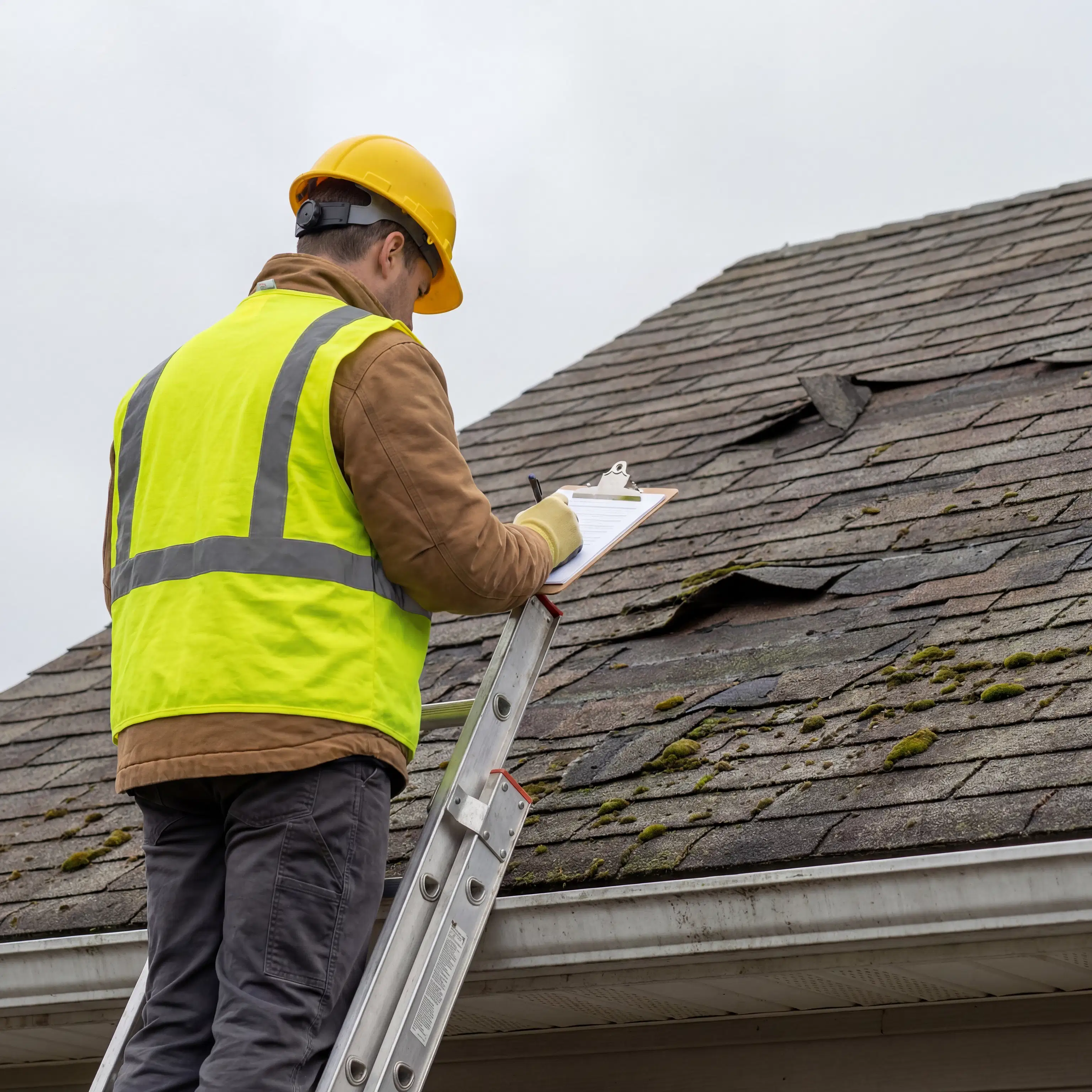
- Missing, cracked, curled, or lifted shingles
- Dark areas where protective granules may be wearing away
- Exposed fasteners or shingles that appear out of alignment
- Moss, algae, or debris holding moisture against the surface
- Uneven or sagging sections of the roofline
Shingles seal the roof against wind-driven rain and melting snow. Damaged tabs are more likely to lift during winter storms, while significant granule loss can indicate aging or hail damage. Minor defects may qualify for roof repair, but widespread deterioration may justify evaluating a full roof replacement.
Examine flashing and roof penetrations
Pay particular attention to chimneys, plumbing vents, skylights, valleys, and places where two roof surfaces meet. Loose flashing, deteriorated sealant, rust, or visible gaps can create direct paths for water.
Clean gutters and confirm drainage
Remove leaves, twigs, and shingle granules from gutters after most nearby trees have dropped their foliage. Confirm that downspouts discharge water away from the foundation and that gutters are firmly attached without low spots.
Clogged drainage allows water to back up at the roof edge. When that water freezes, it can contribute to ice buildup and force moisture beneath the roofing system. Use a stable ladder only if you are trained and comfortable doing so; otherwise, arrange professional help.

2. Look for Moisture, Ventilation, and Ice-Dam Risks
The roof’s exterior is only part of the system. Attic insulation, air sealing, and ventilation all influence how well the roof handles a WNY winter.
Inspect the attic
During daylight, enter the attic safely and leave electric lights off for the first check. Look for pinpoints of outdoor light, which may reveal openings around fasteners, flashing, or roof penetrations. Then use a flashlight to inspect for:
- Damp insulation or compressed, discolored areas
- Water stains on rafters, decking, or ceilings
- Musty odors or visible mold-like growth
- Rusted nails and condensation on the underside of the roof deck
- Bathroom or kitchen exhaust ducts emptying into the attic
- Blocked soffit vents or insufficient airflow near the eaves
A dry day does not rule out a leak. Water stains and rusty fasteners may be evidence of earlier moisture intrusion or condensation. If water has already reached finished rooms, review the signs and next steps for repairing interior water damage.
Reduce the chance of ice dams
Ice dams develop when heat escaping into the attic warms the upper roof and melts snow. The runoff reaches the colder eaves, refreezes, and forms a ridge that can trap water behind it. Effective prevention usually involves a combination of air sealing, balanced ventilation, adequate insulation, clear gutters, and a sound roof edge—not simply removing visible ice.
Do not chop ice with a hammer, pour hot water onto the roof, or use ordinary rock salt on roofing materials. These methods can damage shingles, gutters, and landscaping while creating new safety hazards. Learn more in our guide to preventing ice dams.
3. Check Siding, Trim, and Decide What Needs Professional Attention
Roof maintenance should include the surfaces that direct water away from the structure. Inspect fascia boards, soffits, siding, and trim for cracks, loose panels, peeling paint, rot, pest openings, or staining beneath the roof edge. Wind can loosen exterior materials, while gaps around windows and wall penetrations allow moisture into the building envelope.
Addressing damaged siding before winter can improve weather resistance and prevent a small opening from spreading during repeated freezing and thawing.
Repair or replacement?
A localized repair may be appropriate when damage is confined to a few shingles, a flashing detail, or one small leak and the surrounding roof remains in good condition. Replacement may be more practical when there are recurring leaks, broad granule loss, extensive curling, soft decking, sagging, or multiple layers approaching the end of their service life.
Cost cannot be determined accurately from square footage alone. Roof pitch, access, material choice, decking condition, ventilation improvements, tear-off requirements, permits, and disposal all affect the estimate. Asphalt shingles remain a common value-focused option, while metal roofing offers strong durability and recyclability at a higher initial cost. The right choice depends on the home, budget, maintenance expectations, and warranty terms.
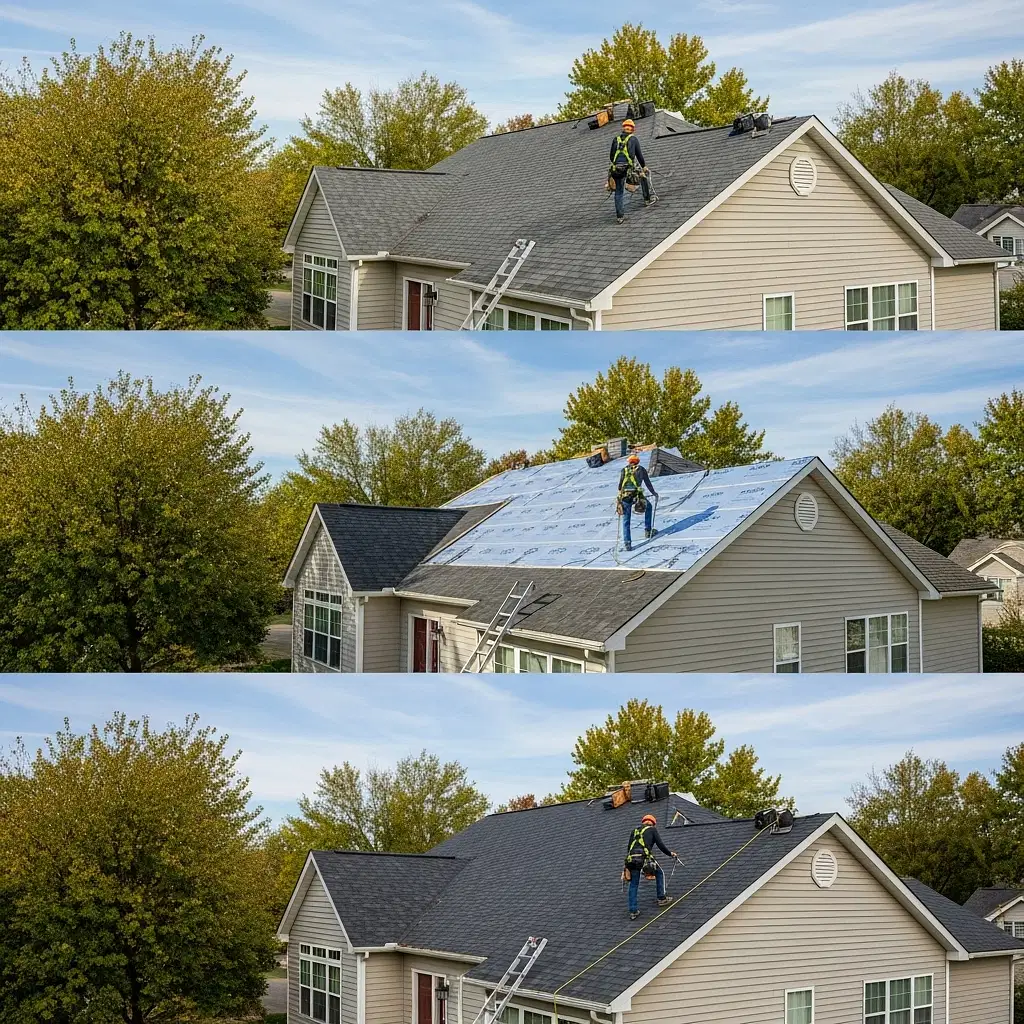
Modern inspections may use drone imagery and aerial measurements to document difficult areas and improve estimating accuracy. Regardless of the technology used, request a written scope that explains materials, underlayment, ventilation, flashing, cleanup, warranty coverage, and how unexpected decking damage will be handled.
Before hiring anyone, verify current liability and workers’ compensation insurance, ask who will obtain required permits, and request recent local references. These steps are especially important after severe weather, when storm chasers may offer rushed assessments or pressure homeowners to sign immediately.
Schedule Fall Repairs Before Winter Arrives
Your pre-winter checklist comes down to four priorities: keep water moving through clean gutters, identify damaged shingles and flashing, confirm the attic stays dry and ventilated, and repair exterior openings before freezing weather arrives. Early action provides more scheduling flexibility and reduces the risk of a preventable leak becoming an urgent winter project.
Home Solution Experts provides Roof Repair, Full Roof Replacement, Siding, and interior services for homeowners around Webster and the 585. If your inspection reveals loose shingles, moisture stains, questionable flashing, or siding damage, contact Home Solution Experts to request a professional evaluation. You can also use the instant estimator as a convenient first step toward planning your project.